Somewhere between chasing a 90 sleep score, getting 10,000 steps, cooling the bed to 68 degrees, logging six miles on Strava, eating protein within thirty minutes of waking up, taking magnesium before bed, getting sunlight before screens, taking gummies for sleep, supplements for stress, cold plunges for resilience, and sauna sessions for longevity, we absorbed a very strange idea:
Every part of life should make us better.
Not happier, necessarily. Not more alive. Not more connected.
Better.
More optimized. More regulated. More disciplined. More efficient. More impressive.
I’ve never been one of those people who “lives in the moment.”
Even when I’m having fun, some small, annoying part of my brain is awake in the corner. Watching. Calculating. Asking if this is good for me or bad for me. If I’ll regret it tomorrow. If I’m being disciplined or indulgent. If this version of me is aligned with the version of me I keep promising myself I’m becoming.
A night out becomes something I’ll need to recover from.
Sleeping in becomes something I have to explain.
Missing the gym becomes proof that I’m falling behind.
Eating late becomes a character flaw.
Having fun starts to feel like a tiny betrayal of the “responsible” woman I’m supposed to be.
And I don’t think I’m alone in that.
I understand the appeal because I’m not anti-routine. I love a routine. I love a walk. I love a clean room, a good workout, a productive morning, a calendar that makes me feel like I’ve briefly defeated chaos. I love the smug little peace of doing the thing I said I was going to do.
Discipline isn’t the enemy.
The problem is when the routine becomes the religion.
A walk is no longer a walk. It’s zone two cardio. A vacation is no longer a vacation. It’s a reset. Rest is no longer rest. It’s recovery. Joy is no longer joy. It’s nervous system regulation.
Even time off has to prove itself useful.
And the strangest part is that all of this is supposedly in service of happiness.
We’ve optimized for years, and yet somehow we seem more anxious, more lonely, more self-conscious, more afraid of wasting time, more suspicious of pleasure. We have better routines and worse attention spans. Better skincare and less comfort in our own skin. Better sleep scores and less intimacy. Better calendars and fewer spontaneous dinners that turn into the kind of night you remember five years later for no logical reason.
Modern self-improvement has become its own kind of moral performance.
It begins innocently. You want to feel better. You want to wake up earlier. You want to move your body. You want to drink less. You want to stop spending three hours on your phone before bed watching Nara Smith make cereal from scratch and The RealReal hauls you can’t afford.
Fair enough.
But then the tools become identities.
You’re no longer someone who works out. You’re a fitness person. You’re no longer someone taking a break from drinking. You’re building a sobriety streak. You’re no longer someone who likes routines. You’re someone who feels anxious without one.
You’re no longer someone trying to feel better.
You’re a project under permanent renovation.
There’s a specific kind of righteousness that comes with becoming disciplined. I know because I’ve felt it. The little ego boost when you wake up early. The private satisfaction of saying no to dessert. The glow of having “gotten your steps in.” The smug little peace of seeing your habits checked off, your body exercised, your sleep measured, your life apparently under control.
Sometimes that feels good because it is good.
Keeping promises to yourself matters. Taking care of your body matters. Having standards matters.
But the moral danger of optimization culture is that it teaches us to confuse control with goodness.
The disciplined person becomes good. The indulgent person becomes weak. The person who sleeps in becomes lazy. The person who goes out becomes unserious. The person who misses the gym becomes someone who has “fallen off.”
So we begin to treat normal human experiences as little failures of self-management. Hunger, sadness, boredom, desire, exhaustion, pleasure, regret. All of it becomes data. All of it becomes something to fix.
We don’t ask, “Did I enjoy my life this week?”
We ask, “Was I consistent?”
We don’t ask, “Did I feel connected?”
We ask, “Did I hit my targets?”
We don’t ask, “Did I make a memory?”
We ask, “Did this throw me off?”
It’s such a clean little trap because optimization culture never sounds cruel. It sounds responsible. It sounds aspirational. It sounds like becoming your best self.
But better for what?
Better at working? Better at looking composed? Better at waking up with no puffiness and answering emails before 9 a.m.? Better at proving that nothing can touch you? That you never need anything, never overdo it, never waste time, never lose control, never text emotionally, never wake up late, never eat something just because it tastes good?
We keep saying we want to become better, but I’m not always convinced we know what better means.
Sometimes “better” just means more useful.
More efficient.
More impressive.
More controlled.
More able to metabolize the chaos of being alive without inconveniencing anyone.
And that’s where I start to get suspicious.
Because a life with no wasted time isn’t necessarily a meaningful one. A life with no indulgence isn’t necessarily healthy. A life with no mess isn’t necessarily admirable.
It may just be small.
Well-managed, but small.
The more I think about it, the more I realize optimization culture isn’t just about health. It’s about fear.
Fear of falling behind. Fear of being ordinary. Fear of being seen as undisciplined. Fear of wasting your potential. Fear of becoming the kind of person who says she wants a life and then doesn’t do enough to deserve it.
So we try to manage the fear by managing everything else.
Your body, your mornings, your calendar, your meals, your workouts, your drinking, your phone, your sleep, your supplements, your habits, your goals, your glow-up plan.
We make the self into a project because a project can be fixed.
A project has milestones. A project has deliverables. A project can be measured. A project gives you the illusion that if you just keep improving the inputs, eventually the whole thing will make sense.
But you can’t spreadsheet your way through life.
I say this with love because I’m guilty.
I’ve organized ambition instead of acting on it. I’ve planned my way into feeling productive. I’ve saved the podcast, bought the journal, made the list, researched the routine, imagined the new version of myself, and felt, briefly, like I had changed.
Planning is seductive because it lets you cosplay as the person you want to become without asking you to actually be her yet.
But at some point, you have to do the thing badly.
You have to write the ugly draft. Go on the walk without tracking it. Have the dinner that runs too late. Miss the workout and realize the world didn’t end. Let yourself be seen before you feel fully improved. Let the conversation be pointless. Let the night be inefficient. Let the day be a little unproductive and still count as a day you were alive.
The irony is that so much of what makes life feel good is impossible to optimize without destroying it.
Friendship is inefficient.
Beauty is inefficient.
Falling in love is inefficient.
Grief is inefficient.
Laughter is inefficient.
Sitting around a table for three hours talking about nothing that will make you richer, hotter, thinner, smarter, or more successful is inefficient.
And thank God.
Because if everything in life has to justify itself through future productivity, then pleasure becomes suspicious. Rest becomes something you earn. Joy becomes something you schedule between obligations. Your body becomes a machine you’re constantly trying to upgrade, and your life becomes an endless performance review with no manager, no finish line, and no raise.
This isn’t a call to abandon discipline.
I’m not interested in romanticizing chaos. I’ve done that too, and it’s not nearly as cute as it sounds. There’s nothing glamorous about being constantly late, constantly hungover, constantly avoiding yourself, constantly making your future self pay for your present self’s refusal to care.
Discipline is good. Routines are good. Sleep is good. Movement is good. Self-respect is good.
But control isn’t the same thing as care.
And a good life isn’t the most optimized life.
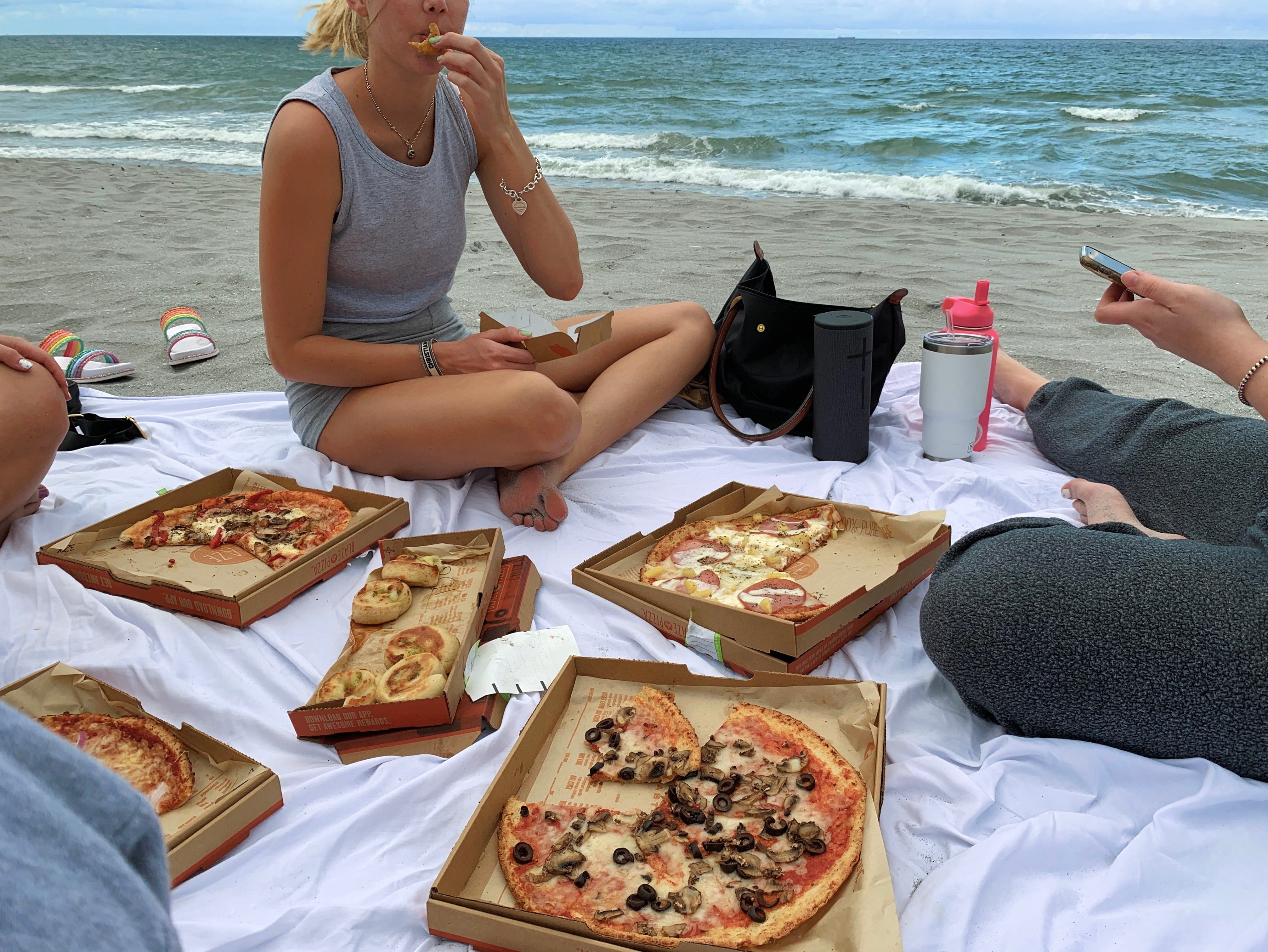
A good life has rhythm. It has seasons. It has mornings where you wake up early, drink water, take a walk, and feel annoyingly proud of yourself. It also has nights where you stay out too late and laugh so hard your stomach hurts. It has green juice and 2 a.m. pizza. It has discipline and indulgence. It has routine, but also rupture.
It has contrast.
And contrast is what makes us feel alive.
You can’t feel rested if you’re never tired. You can’t feel healthy if you’re terrified of every indulgence. You can’t feel joy if you’re constantly evaluating whether joy fits into the plan. You can’t feel free if every choice is being monitored by the imaginary wellness board of directors in your head.
Maybe the point isn’t to become someone who never falls off.
Maybe the point is to build a life you don’t have to escape from every weekend, punish yourself for every Monday, and optimize your way back into every January.
Maybe the point is to stop treating yourself like a problem to solve.
That’s what I want to remember.
Not every pleasure needs a defense.
Not every dinner needs to be balanced.
Not every season of your life needs to be your most disciplined.
Sometimes the skipped workout isn’t a moral failure. It’s just a skipped workout.
Sometimes the 2 a.m. pizza was the point.
So no, I don’t think we need to abandon self-improvement.
I think we need to stop worshipping control.
We need fewer private scoreboards. Fewer lives lived for the annual recap. Fewer days measured only by whether we were “good.”
We need to remember that being human isn’t an optimization problem. It’s not a streak. It’s not a dashboard. It’s not a set of metrics waiting to be improved.
A life can be healthy and still have room for pleasure.
A life can be disciplined and still have room for surprise.
A life can be beautiful and still be inefficient.
And a life measured perfectly isn’t the same as a life fully lived.