CNBC declared this month that livestream shopping has finally arrived in the U.S.. I believe them, mostly because I’m part of the problem.
TikTok’s live-shopping sales more than doubled in the first half of 2026. In 2024 alone, brands and creators hosted 8 million hours of TikTok LIVE shopping in the U.S.
This is not just QVC with a better algorithm. It’s QVC rebuilt for the For You Page: shopping as a game, a group chat, and something to do in bed at 10PM.
In today’s letter:
How I accidentally won two diamonds in bed
Did I get scammed? I price-checked both
TikTok gave QVC a dopamine transplant
Lab-grown diamond prices are down 96% and being auctioned like Pokémon cards
Why Gen Z is broke and still buying Chanel
Luxury has an arbitrage problem
Plus: three takeaways for shoppers and brands
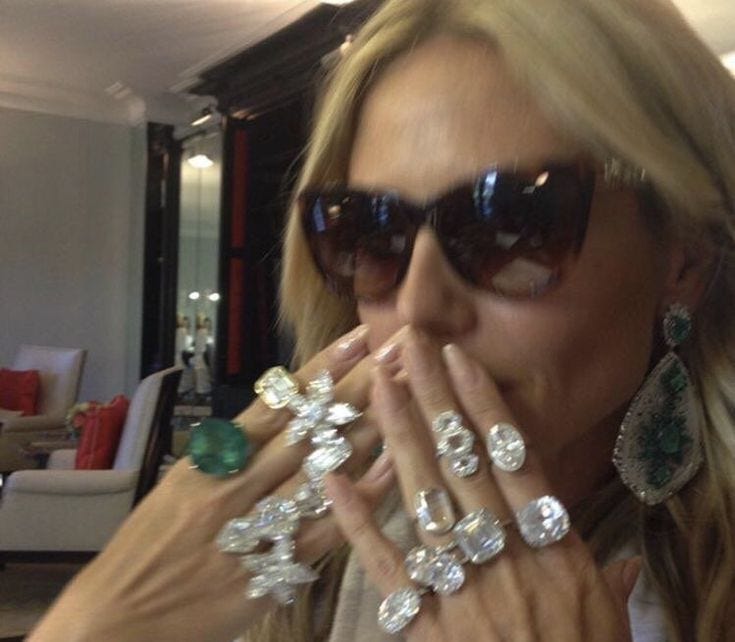
The land of diamonds
I fell into the magical rabbit hole of TikTok Live the other night.
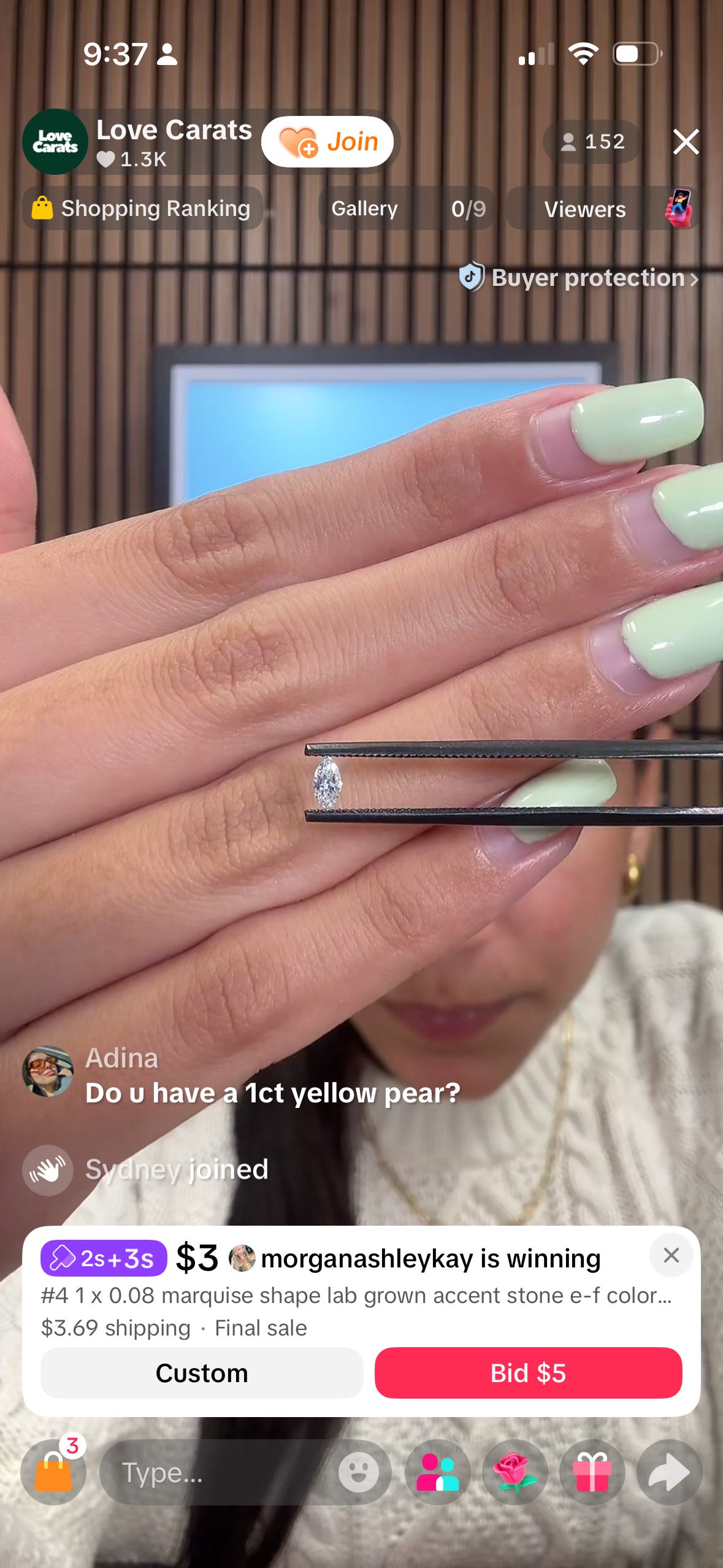
A woman with mint-colored nail polish was holding a marquise diamond between a pair of tweezers, tilting it under a ring light until it threw little rainbows across the screen. Starting bid: $3.
$5. Then $38. Then $41.
Swipe.
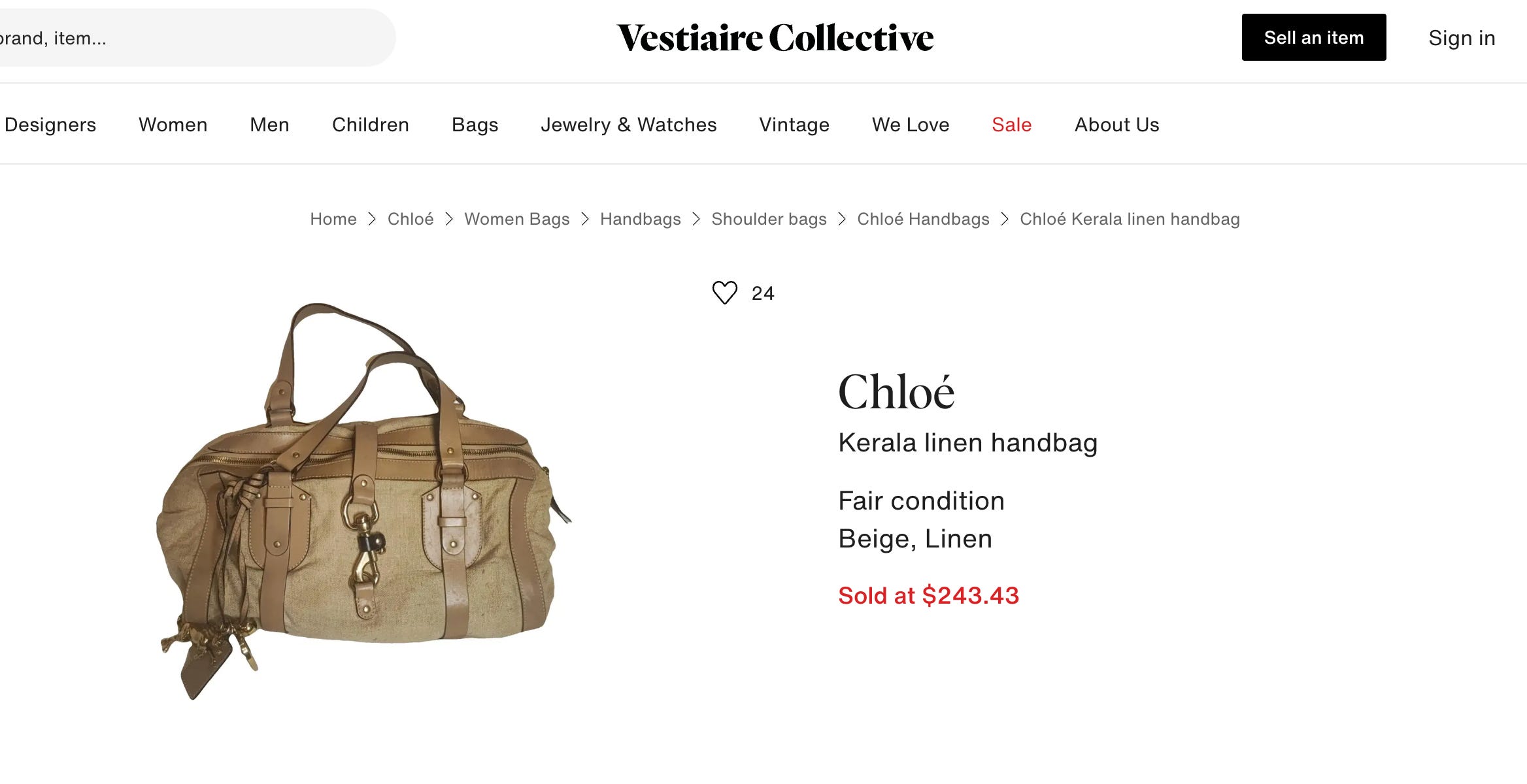
A woman in white cotton gloves turning a pre-owned Chloé bag slowly, like a museum piece. Current bid: $12. The same bag was listed on Vestiaire Collective for $243.43.
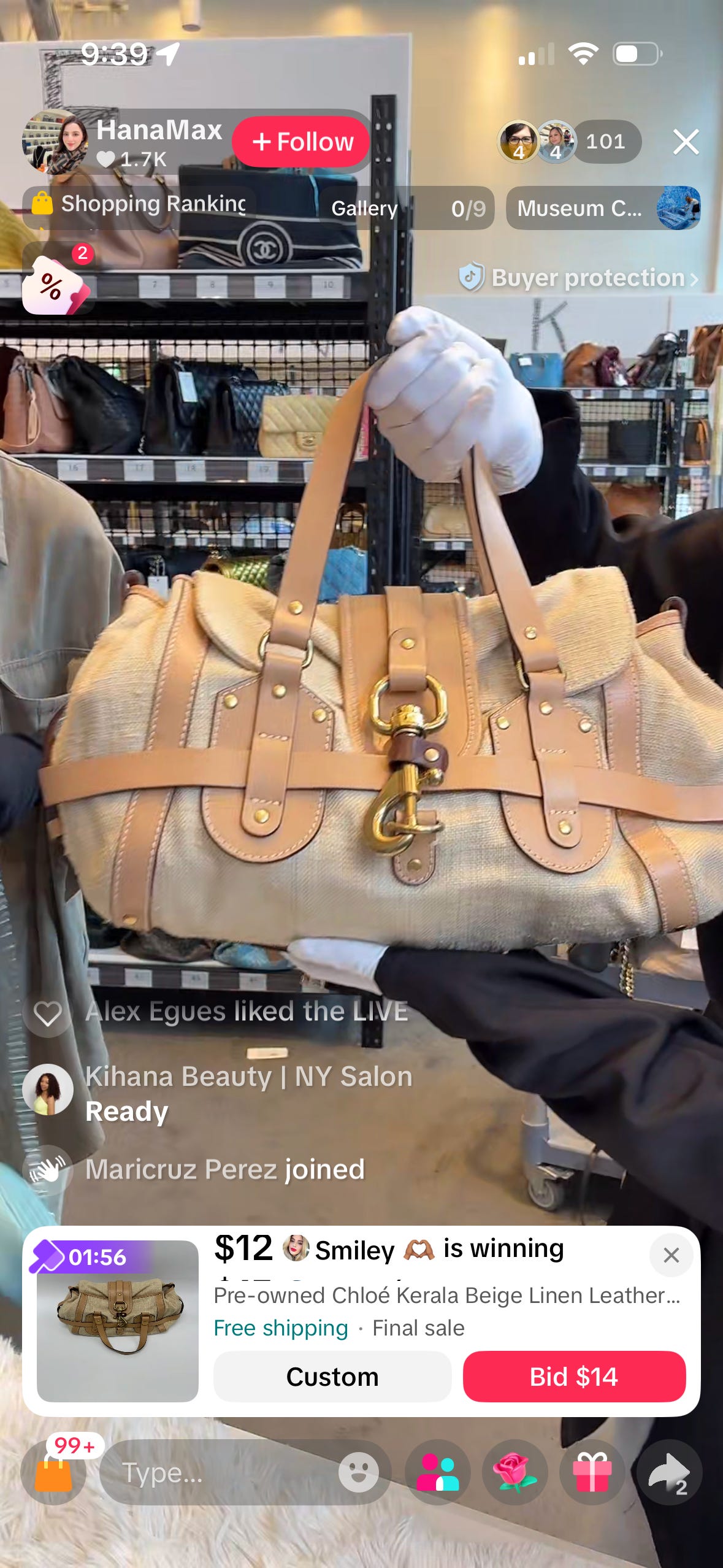
Could this be real? Was it a scam?
Swipe again. Pokémon cards ripped open and auctioned live. Rare variegated houseplants sold from someone’s sunlit living room. Vintage Chanel held up to an iPhone while strangers fight over it in the comments.
Then I bid on something. And won!
A 0.74-carat marquise, lab-grown, IGI-certified, from @lovecarats for $93. And a cute little 0.20-carat oval, lab-grown, from a seller called Jewelry Sample for $54. Accidentally(?).
My For You page now thinks I’m a jeweler.
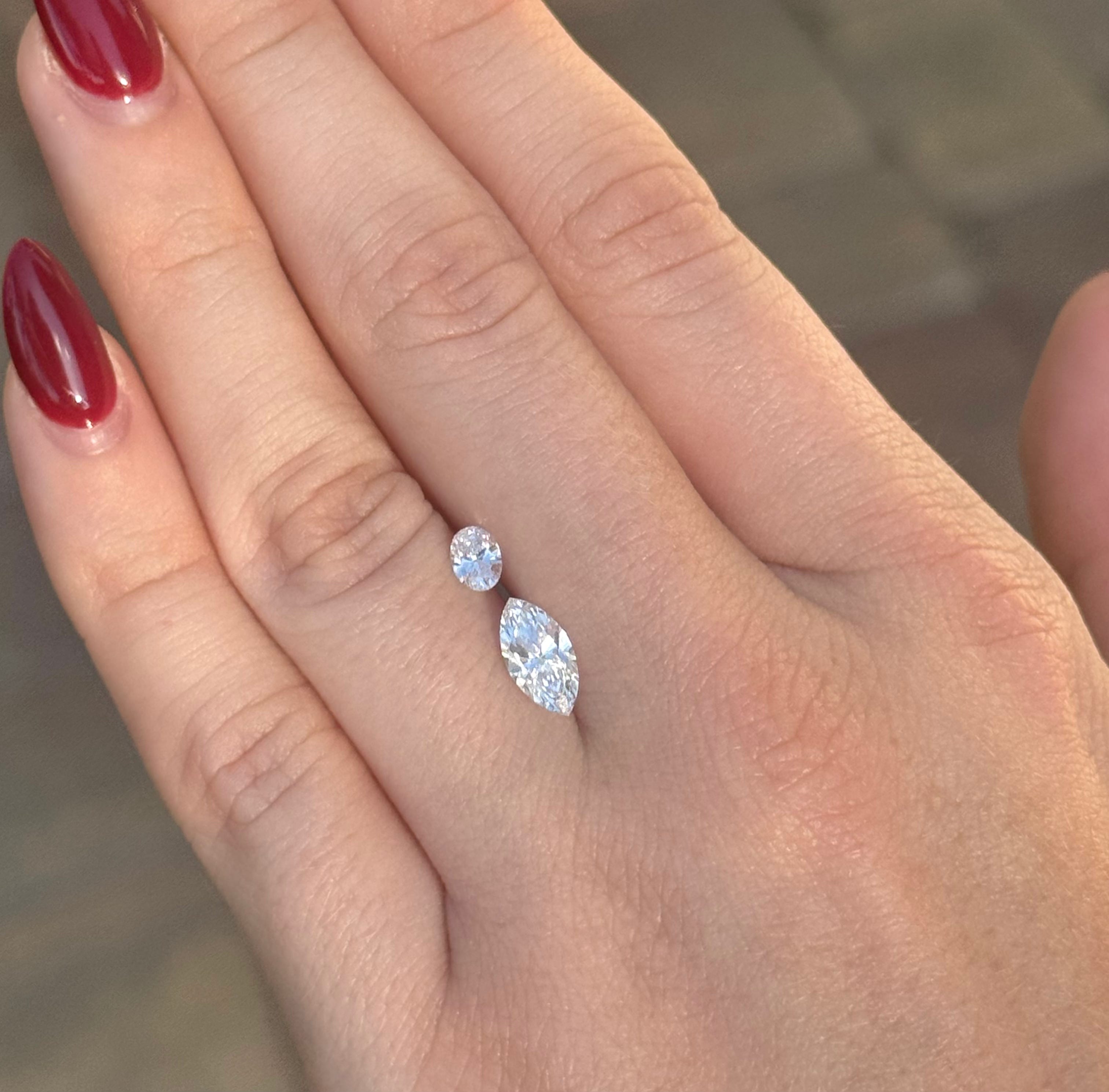
But winning, I have to admit, scratched an itch. And it led me here:
TikTok Live shopping works because it doesn’t feel like shopping until you’ve already bought something.
So... did I get scammed?
This was my first question, so it’s probably yours too. I did the math.
Diamond #1: a 0.20-carat oval, lab-grown, listed as E/F color and VS/VVS clarity. I paid $54, plus $8.10 in fees. There’s no independent certificate, which means I can’t verify those grades or price-check it perfectly like-for-like. But a certified 0.20-carat D/VVS2 oval is currently listed around $113 at DreamStone.
Verdict: likely a good price, but not enough documentation to call it a steal.
Diamond #2: a 0.74-carat marquise, lab-grown via CVD, E color, VVS2 clarity, with excellent cut, polish and symmetry, no fluorescence, and an IGI report to prove it. I paid $93. A current 0.74-carat E/VVS2 IGI-certified marquise with comparable finish is listed at $299.
Verdict: a real deal, about 69% below a comparable online retail listing.
So one was probably a good buy and one was unequivocally a great one.
Here’s what was unsettling: I couldn’t tell the deal from the gamble. Both came with the same countdown clock, the same bidding war, the same little hit of validation when the host said my username and “SOLD.” I only learned which diamond was actually worth it after I stopped scrolling and looked at the numbers.
The discount wasn’t the product. The adrenaline was.
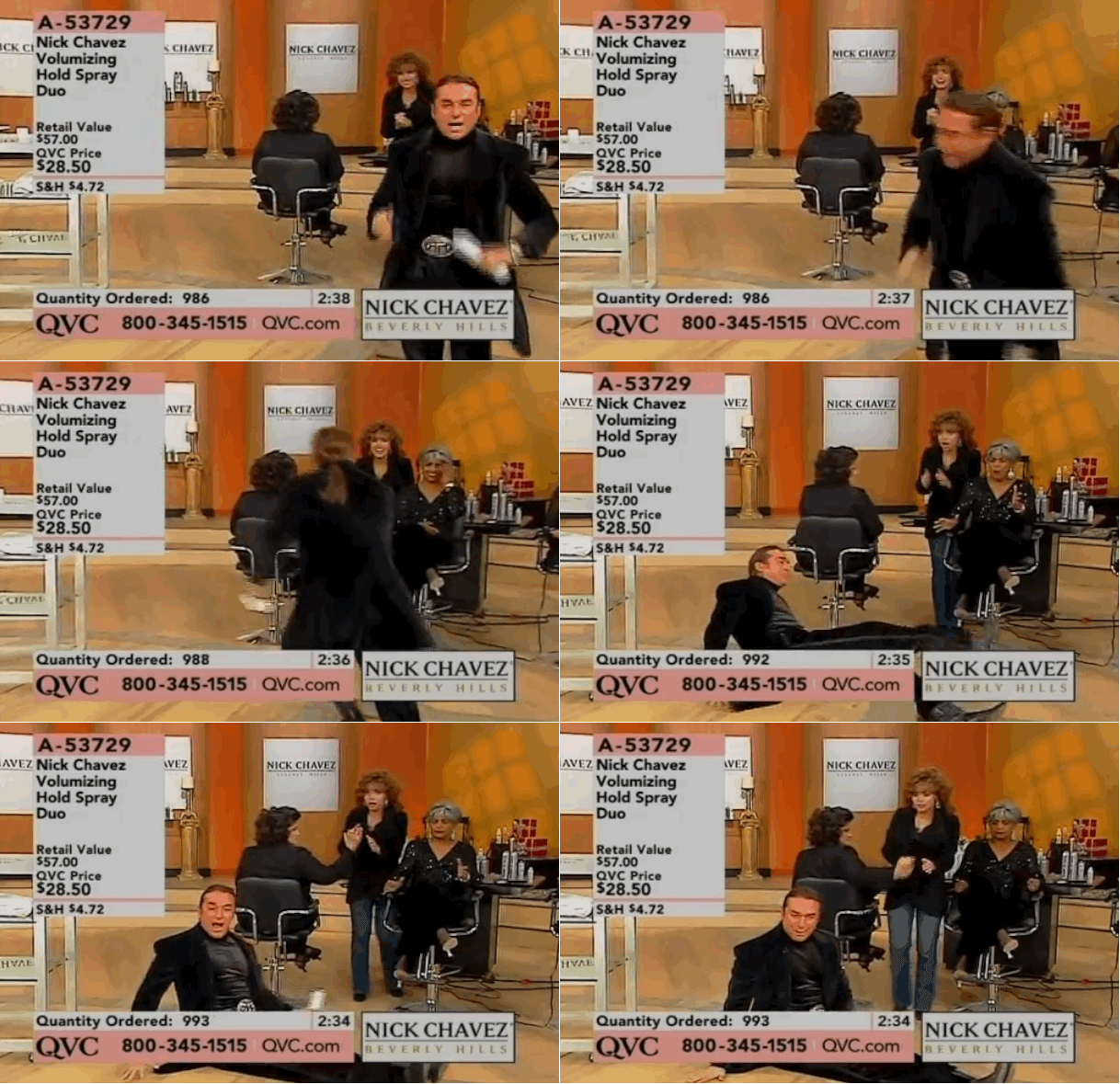
Wait... is this just QVC?
Kind of. QVC figured out decades ago that shopping could be entertainment. A charismatic host. A product spinning under hot studio lights. Only 17 left!
TikTok gave it a dopamine transplant.
Now there’s a countdown clock, a chat flying by, usernames competing against you, gifts exploding across the screen in confetti and hearts, and a giant pink BID button. The host greets you by username when you join. It feels less like a store and more like a group chat with a checkout button.
And you don’t tune in. The store finds you.
The mall requires you to decide to go shopping. Amazon requires you to know what you want. TikTok only requires you to be bored.
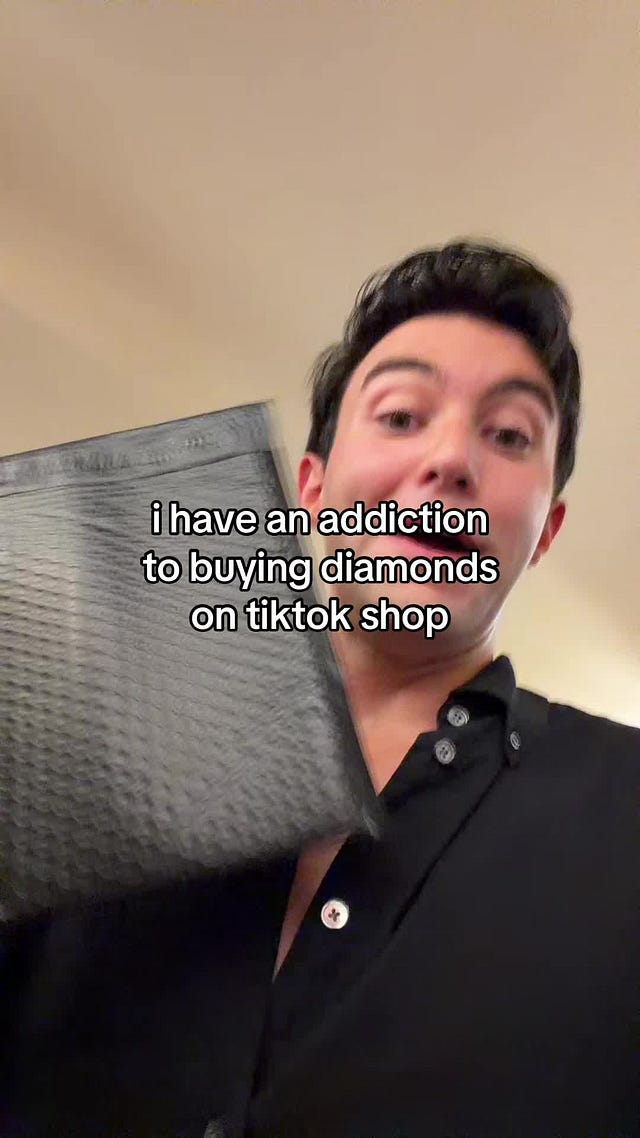
Diamonds are where this gets weird
Diamonds were designed for the opposite experience. Velvet trays. Glass cases. A glass of champagne you didn’t ask for. An intimidating conversation about the four Cs.
Now:
“0.74-carat marquise, E color, VVS2. ONE DOLLAR BIDS. GO!”
Three seconds. Thirty-eight dollars. Sold. Next diamond.
The luxury object is now a game. And the economics behind it are collapsing too. Analyst Edahn Golan’s lab-grown diamond price index is down 96% since 2018, and 61% of couples who married in 2025 chose a lab-grown engagement ring.
A product built on scarcity is suddenly abundant. And we’re auctioning it on TikTok.
 Tiktok failed to load.
Enable 3rd party cookies or use another browser
Broke, but make it Chanel
Gen Z hasn’t stopped wanting nice things. We’ve just gotten better at finding the loophole.
Vintage over new. Lab-grown over mined. Depop over the mall. Dupes when the real thing feels impossible to justify.
And it’s not hard to see why. Nearly half of Gen Z doesn’t feel financially secure, and more than half live paycheck to paycheck. This year, 55% said they’re delaying major life decisions, including marriage, because of money.
But our feeds still serve vintage Birkins, Aperol spritzes on Lake Como, and 22-year-olds touring Tribeca apartments before breakfast. The aspiration is intact. It’s the old price of admission that no longer works.
Luxury has an arbitrage problem
Luxury used to rely on a gap between what something cost and what it looked like it cost. Technology is closing that gap.
A lab-grown one-carat diamond catches the light exactly like a one-carat diamond, whether you paid $1,200 or $93. A convincing vintage find or dupe can give you the same silhouette, the same outfit photo, and most of the same social signal for a fraction of the price.
Luxury ran on a simple equation:
scarcity → exclusivity → status → price
The internet has made every part of that equation easier to challenge. It reveals the substitutes, surfaces the resale listings, and puts the price comparison in your hand while you’re still watching the auction.
So why should you care?
1. The show is now the store.
The internet used to split shopping into steps: Instagram to see it, Google to research it, Amazon to buy it. TikTok compresses all of that into seconds: see → want → compete → buy. Retailers are no longer only competing on product or price. They’re competing on who can make buying the most entertaining. That’s why Pokémon cards, houseplants, vintage Chanel, and loose diamonds can all work in the same format.
2. Looking expensive is no longer evidence that something was expensive.
When the aesthetic is accessible, brands have to earn their premium somewhere else: craftsmanship, provenance, service, and real scarcity. If they can’t articulate the difference, the chronically online shopper will find it for less. See: my $93 IGI-certified marquise versus a comparable $299 listing.
3. The thrill can matter more than the deal.
One of my diamonds was an obvious steal. The other was probably just a good buy. But during the Live, they delivered the exact same rush: countdown clock, bidding war, the host saying my username, then “SOLD.” The price-check came later. That’s the design. When shopping feels like a game, spending doesn’t register in quite the same way.
We haven’t abandoned aspiration. We’ve learned to unbundle it.
Give us the giant diamond without the giant price. Vintage Chanel without the boutique. The thrill of an auction without Sotheby’s.
And apparently, give me two diamonds while I’m lying in bed scrolling TikTok at 10PM.
Have you ever bought something on TikTok Live? Reply and tell me what you won. I won’t judge.